


Is It Legal to Track Your Partner’s Car in Australia?

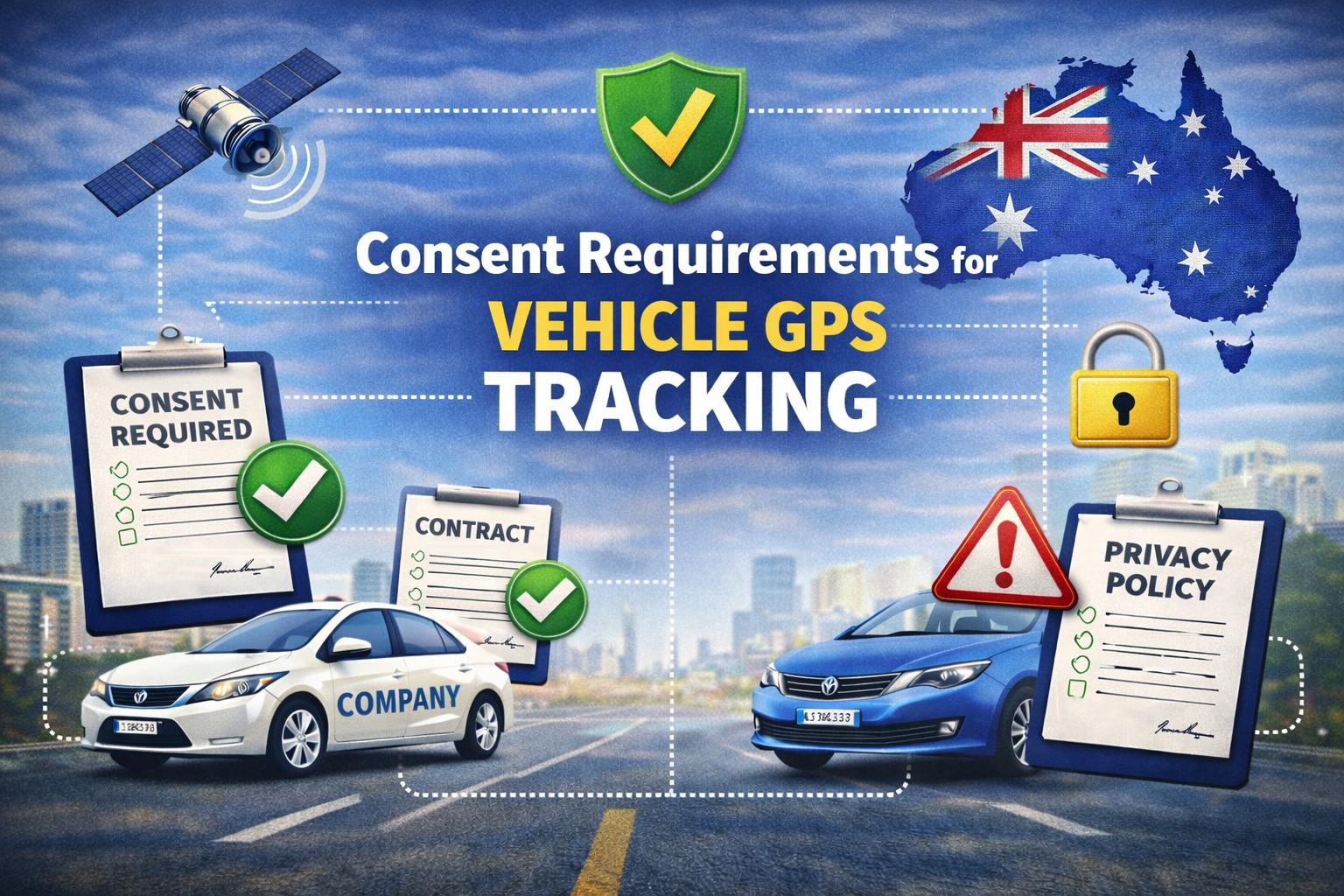
GPS tracking is commonly used for vehicle security, fleet management, and asset protection. However, one of the most frequently asked — and misunderstood — questions is:
Is it legal to track your partner’s car in Australia?
The short answer is: It depends.
In some situations it may be legal. In many situations, it is not.
This article explains when tracking may be lawful, when it is not, and what you need to consider before installing a GPS tracker.
Why This Is a Sensitive Area
Tracking a partner’s vehicle is not just a technical issue — it raises serious privacy, consent, and legal concerns.
In Australia, laws around:
- Privacy
- Surveillance
- Stalking
- Harassment
- Domestic and family violence
Can all be relevant, depending on the situation.
The key factor is consent and lawful authority.
Tracking a Vehicle You Own
If you own the vehicle outright and your partner is a user of that vehicle, you generally have the right to install a GPS tracker.
However, even in this case:
- Transparency is strongly recommended
- Secret tracking can still cause legal and relationship issues
- The purpose of tracking matters
While ownership gives you authority over the vehicle, it does not automatically give you the right to secretly monitor another person’s movements.
Jointly Owned Vehicles
If the vehicle is jointly owned, both parties generally have equal rights.
In these situations:
- Installing a GPS tracker without the other person’s knowledge can create legal and civil disputes
- Best practice is to inform the other owner
- Consent is strongly recommended
Secret tracking in jointly owned vehicles is a common source of legal complaints.
Tracking a Vehicle You Do NOT Own
If the vehicle is owned solely by your partner and not by you, installing a GPS tracker without their knowledge is very likely unlawful.
This may fall under:
- Surveillance offences
- Privacy breaches
- Stalking laws
- Harassment laws
- Domestic violence legislation (in some circumstances)
In simple terms:
You should never install a GPS tracker on a vehicle you do not own or have clear authority over without consent.
Consent Is Critical
Consent is the most important factor in determining legality.
If your partner:
- Knows about the tracking, and
- Has agreed to it, and
- Has given informed consent
Then tracking may be lawful.
Without consent, tracking can quickly cross into illegal territory.
The Role of State Surveillance Laws
Each Australian state has its own surveillance legislation, such as:
- NSW – Workplace Surveillance Act / Surveillance Devices Act
- VIC – Surveillance Devices Act
- QLD – Invasion of Privacy Act
- Other states – various surveillance and privacy laws
While these laws differ, they generally restrict:
- Covert monitoring
- Tracking without consent
- Use of tracking to invade privacy
Ignorance of these laws is not a defence.
Tracking for Safety vs Control
Some people consider tracking for safety reasons, such as:
- Concern for wellbeing
- Health issues
- Emergency situations
Even in these cases:
- Consent is still required
- Transparency is essential
- Tracking should never be used to control, monitor, or manipulate
Using GPS tracking to control a partner’s movements is not appropriate and may be unlawful.
GPS Tracking and Domestic Violence Laws
This is important.
In some circumstances, using tracking technology without consent can be considered a form of:
- Coercive control
- Stalking
- Intimidation
Australian domestic violence laws increasingly recognise technology-based monitoring as a risk factor.
Using GPS tracking in a way that causes fear, distress, or control can have serious legal consequences.
What Is Generally Not Legal
You should not:
- Secretly track your partner without their knowledge
- Install a tracker on their vehicle without consent
- Use GPS tracking to monitor their movements
- Use tracking to confront, intimidate, or control
- Use tracking deceptively
These actions can expose you to criminal charges and civil action.
When Tracking May Be Acceptable
Tracking may be acceptable when:
- You own the vehicle and have informed your partner
- The vehicle is jointly owned and both parties agree
- Tracking is for legitimate reasons (e.g. theft protection)
- There is clear consent and transparency
Even then, it should be used responsibly.
The Legal Risk Is Real
Many people underestimate the legal risk.
Complaints in this area often arise from:
- Relationship breakdowns
- Family law disputes
- Domestic violence proceedings
- Police complaints
GPS tracking evidence is increasingly being used in legal cases.
Who Is Responsible?
The responsibility lies with the person using the tracker.
GPS providers supply the technology, but:
- Users must ensure lawful use
- Users must obtain consent
- Users must comply with all laws
This is consistent across Australia.
Best Practice
If you are considering GPS tracking in a personal relationship:
- Be open and transparent
- Obtain clear consent
- Use tracking only for legitimate purposes
- Never use tracking to control, monitor, or intimidate
- When in doubt, do not proceed
Transparency is always safer than secrecy.
Final Thoughts
So, is it legal to track your partner’s car in Australia?
In many cases, no — especially without consent.
Tracking without authority or consent can be unlawful and can have serious legal consequences. Even where you own the vehicle, transparency and consent are strongly recommended.
GPS tracking should be used for security, safety, and legitimate purposes — never for control, surveillance, or coercion.


Continue researching
Useful EZY GPS product and setup resources
Compare tracker types, review plan pricing and follow practical installation guidance after reading an EZY GPS article.