


Real-Time GPS Tracking vs Passive Tracking Explained

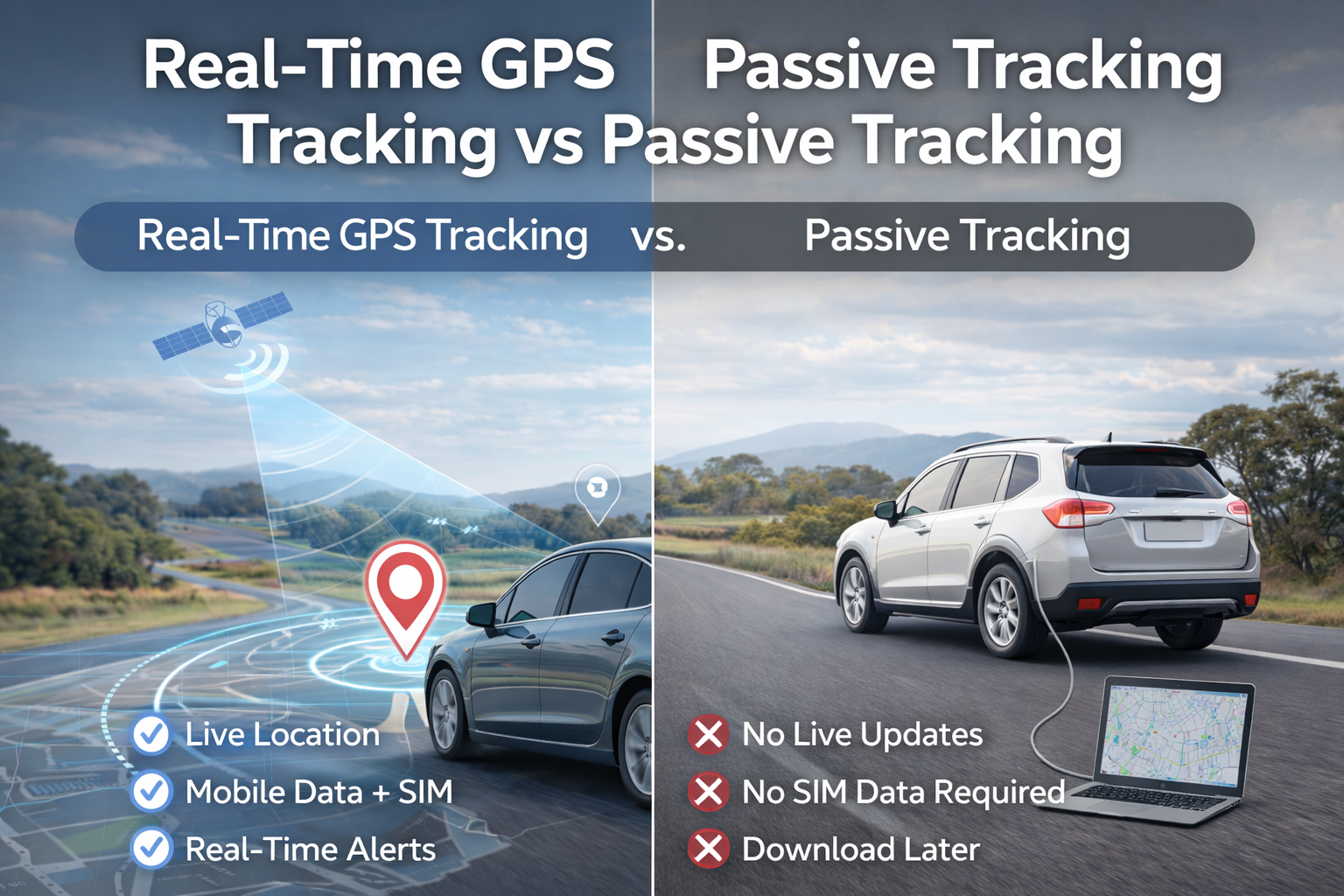
When choosing a GPS tracking solution, one of the most important differences to understand is real-time GPS tracking vs passive GPS tracking. While both methods use GPS satellites to record location, they work very differently and are suited to different use cases.
This article explains the difference between real-time and passive GPS tracking, how each works, and which option is best for most Australian users.
What Is Real-Time GPS Tracking?
Real-time GPS tracking allows you to see the live location of a vehicle or asset as it moves.
A real-time GPS tracker:
- Sends location updates automatically
- Uses mobile data to transmit information
- Displays movement instantly in an app or dashboard
- Supports alerts, geofences, and reporting
Updates can occur every few seconds or minutes depending on the settings.
How Real-Time GPS Tracking Works
Real-time tracking follows a simple process:
- GPS satellites determine the device’s location
- The tracker sends data via a SIM card
- Location appears immediately in the tracking app
This makes real-time tracking ideal for vehicles, fleets, and theft prevention.
What Is Passive GPS Tracking?
Passive GPS tracking records location data but does not transmit it live.
A passive GPS tracker:
- Stores location data internally
- Does not use mobile data
- Requires the device to be physically retrieved
- Allows data review only after trips are complete
Passive tracking is best described as a location logger, not a live tracking system.
How Passive GPS Tracking Works
With passive tracking:
- GPS satellites record location points
- Data is saved to internal memory
- Information is downloaded later to a computer
There are no live updates, alerts, or notifications.
Key Differences Explained Simply
Live Location Visibility
Real-time GPS tracking shows where a vehicle is right now.
Passive tracking only shows where the vehicle has been, after the fact.
Mobile Data and SIM Cards
Real-time GPS tracking requires mobile data and a SIM card to send information.
Passive GPS tracking does not use mobile data because nothing is transmitted live.
Alerts and Notifications
Real-time tracking supports alerts such as:
- Movement detection
- Speed alerts
- Geofence entry or exit
Passive tracking does not support alerts of any kind.
Theft Prevention
Real-time GPS tracking can help locate stolen vehicles immediately.
Passive tracking offers no theft recovery capability.
Ease of Use
Real-time tracking is fully automated and accessible through an app.
Passive tracking requires manual downloads and physical access to the device.
Which GPS Tracking Type Is Best for Most Users?
For most Australian users, real-time GPS tracking is the better option.
It is preferred because it:
- Provides instant visibility
- Improves vehicle security
- Eliminates manual data handling
- Works for personal and business use
- Is now affordable and reliable
Passive tracking is now rarely used and generally only suits niche situations where live tracking is unnecessary.
Real-Time GPS Tracking for Australian Conditions
Real-time GPS tracking works across Australia:
- GPS positioning works everywhere
- Mobile coverage enables live updates
- Data is stored when signal is lost
- Information uploads once coverage returns
This makes it suitable for metro, regional, and remote use.
Which Type of GPS Tracking Does EZY GPS Use?
EZY GPS uses real-time GPS tracking across all devices.
This provides:
- Live vehicle location
- Alerts and reporting
- SIM card and data included
- Easy access via mobile app
Real-time tracking offers better visibility, security, and usability.
Final Thoughts
While both real-time and passive GPS tracking rely on satellite positioning, the difference in functionality is significant. Real-time GPS tracking delivers live insights, alerts, and peace of mind, making it the preferred choice for modern vehicle tracking in Australia.


Continue researching
Useful EZY GPS product and setup resources
Compare tracker types, review plan pricing and follow practical installation guidance after reading an EZY GPS article.